rabe meaning slang is a modern piece of texting slang without one fixed definition, showing up as a soft stand-in for “babe,” a descriptor for bold or chaotic energy, or just a warm little filler word dropped into a sentence.
Picture this: your phone buzzes, a text reads “hey rabe meaning slang” and you freeze, torn between flattery and confusion. That split-second reaction is exactly why this word has quietly taken over group chats and comment sections everywhere.
Unlike most slang,rabe meaning slang refuses to settle on one meaning, shifting shape across texts, TikTok captions, and dating app openers. That flexibility makes it messy, oddly charming, and worth understanding before it lands in your own inbox.
Short Answer: There’s No Single Agreed-On Meaning
Most internet slang settles into one dominant use pretty fast. Think about “bet,” “no cap,” or “bussin.” Everyone online more or less agrees on what they mean, even if the exact vibe shifts a little by group. Rabe hasn’t done that. It’s still splitting into a few different directions depending on the platform, the sender, and the context.
Right now, three competing camps exist:
- A stylized or typo version of “babe” — soft, affectionate, common in texting and dating apps
- A descriptor for bold, confident, or slightly chaotic behavior — closer to “wild” or “iconic”
- A pure tone marker with no literal meaning — it just adds warmth or emphasis to a sentence
None of these is “the wrong one.” They coexist, and that’s actually the most interesting thing about this word. If you’ve been confused about what does rabe mean, it’s because you’ve probably seen two or three of these uses without realizing they’re not the same thing.
“Language doesn’t wait for consensus before it spreads. Sometimes a word gets used in five different ways before anyone agrees on one.” — a pattern linguists have observed repeatedly with fast-moving Gen Z slang
That quote captures the situation well. Rabe is mid-negotiation. It hasn’t landed yet, and it might land in more than one place at once.
Is This Even a Real Slang Word?
Fair question, and worth asking directly instead of dancing around it. Here’s where rabe stands as of 2026:
- It has no listing in Merriam-Webster, Dictionary.com, or any major published dictionary
- Urban Dictionary entries exist, but they’re inconsistent, low-vote, and contradict each other
- It shows up in scattered TikTok comments, Instagram comments, and texts, but not with the volume or consistency of genuinely viral terms like “rizz” or “delulu”
So is it made up? Not exactly. Real people do type it, in real conversations, with real intent behind it. But it sits in a gray zone between “emerging slang” and “small-scale texting habit that a few corners of the internet picked up.” That distinction matters because a lot of content online treats rabe as though it’s already a settled cultural phenomenon with a clear history. It isn’t. Treat any source (including this one) that claims a definitive, single-sentence definition with a healthy amount of skepticism.
That said, dismissing it completely would be inaccurate too. Words don’t need dictionary approval to function in chat language. Plenty of texting terms live and die entirely within group chats and never touch a formal reference book, and that doesn’t make them less real to the people using them.
The Three Real Definitions People Actually Use
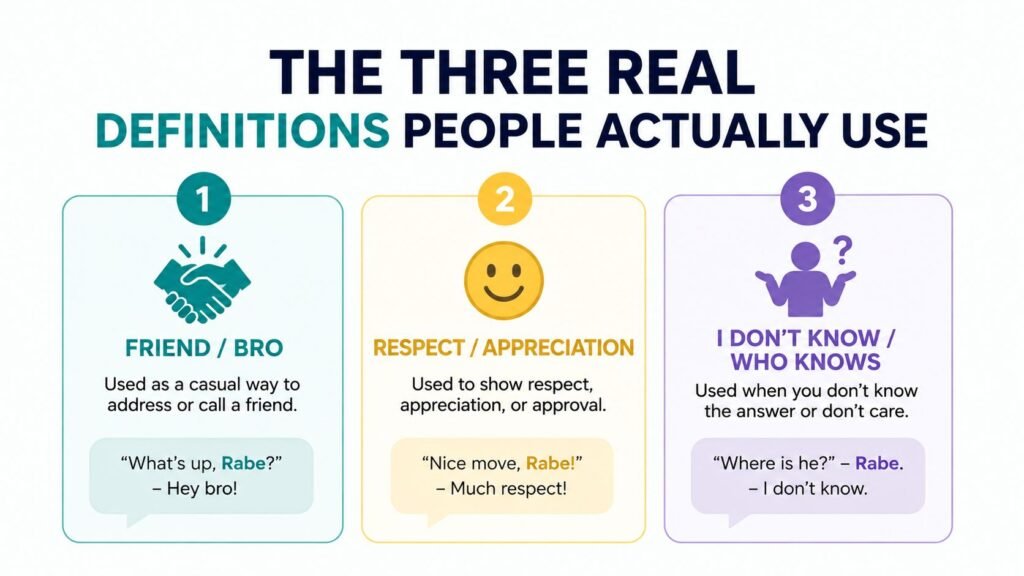
Let’s break down each camp properly, since lumping them together is where most confusion starts.
As a Stylized Version of “Babe”
This is probably the most common way you’ll encounter it in texting slang. Someone types “rabe” instead of “babe,” either as an intentional cute spin or because autocorrect nudged the spelling. It functions as an affectionate term, a pet name, or a flirty nickname — basically doing the same job as “babe” or “bae,” just with a slightly different, softer texture.
Example:
“Hey rabe, how was your day?”
This version leans warm and personal. You’ll see it most in one-on-one messaging: couples texting, early-stage dating conversations, or close friends who’ve adopted it as an inside joke. It’s gender-neutral — it shows up regardless of who’s texting who, which is common with modern endearment terms that have drifted away from strictly romantic use.
As a Descriptor for Bold or Confident Behavior
The second camp treats rabe almost like an adjective. In this use, calling something “rabe” means it’s bold, unexpected, or has a certain fearless energy to it.
Example:
“He quit his job with no backup plan? That’s kind of rabe.”
Here the word carries a mix of admiration and mild disbelief, similar to how people use “wild” or “iconic” in casual conversational style. It’s less about affection and more about reacting to someone’s energy or choices. This use pops up more in video comments and captions than in direct one-on-one texts.
As a Pure Tone Filler
The third camp is the trickiest to pin down because it barely means anything on its own. Here, rabe just gets tacked onto a sentence to soften it, add friendliness, or signal that you’re paying attention.
Example:
“I feel that, rabe” or “No way, rabe!”
Strip the word out and the sentence’s actual meaning doesn’t change at all. What changes is the tone. It reads like a verbal nod, similar to how “fr” or “bro” gets used in casual texting without adding new information, just personality and warmth.
Quick Reference Table
| Use Case | What It Signals | Common Platform | Formality |
|---|---|---|---|
| Stylized “babe” | Affection, closeness | Texts, dating apps | Very informal |
| Bold/chaotic descriptor | Admiration or disbelief | TikTok, Instagram comments | Informal |
| Tone filler | Warmth, casual emphasis | Group chats, DMs | Very informal |
Where the Word Actually Comes From
Here’s where things get genuinely interesting, and where a lot of the confusion around rabe meaning actually originates. Two completely unrelated, verifiable meanings of the word “Rabe” already existed long before the slang use showed up, and search engines mix all three together constantly.
Rabe as a Surname
Rabe is a legitimate surname with roots in both German and Slavic naming traditions. In German, it derives from Rabe, meaning “raven,” a name that historically got attached to people based on dark hair, a watchful nature, or simply local dialect variations of bird-related surnames. It’s a real, documented family name that predates any internet slang by centuries. If you search “Rabe meaning” without context, genealogy sites and surname databases often outrank the slang usage entirely, which adds to the general mess of contradictory results people run into.
Broccoli Rabe, the Vegetable
Yes, this is where a chunk of search traffic goes, and it has zero connection to the texting slang. Broccoli rabe (also called rapini) is a leafy green vegetable in the Brassica family, related to turnips more closely than to broccoli despite the name. It’s popular in Italian cooking, often sautéed with garlic and olive oil. The word “rabe” here comes from Italian dialect, not from any modern internet culture trend. It’s a coincidence of spelling, nothing more, but it does explain why some online slang guides awkwardly pivot into vegetable trivia halfway through an article about texting.
Why These Unrelated Meanings Matter
Because three totally separate meanings share one spelling, search results for “rabe meaning” end up a jumbled mix of surname records, recipe blogs, and half-baked slang explainers. If you’ve felt like the internet couldn’t give you a straight answer, that’s a big part of why. It’s not that the slang term is impossible to explain. It’s that it’s fighting for visibility against two older, unrelated words with the exact same spelling.
How People Use Rabe in Real Conversations
Context is everything with this word, maybe more than with any other current slang term. Here’s how it typically plays out across different common platforms.
Texting and WhatsApp
In one-on-one WhatsApp chats and standard SMS, rabe usually leans toward the affectionate “babe” substitute. It’s soft, low-stakes, and often paired with an emoji to clarify tone. Since text lacks vocal inflection, senders often lean on emoji or exclamation points to make sure the friendly tone lands the way they intend.
Example exchange:
“Running 10 mins late, rabe 😅” “No worries, take your time!”
Instagram and TikTok Comments
On social media, the word shifts toward the second camp: bold, confident, attention-grabbing. Instagram comments and TikTok comments are where you’ll most often see “rabe” used as a reaction to someone’s outfit, move, or general energy in a video or post.
Example:
“The way she just walked off stage like that… rabe.”
This usage functions a lot like other short-form hype words such as “bussin” or “fire,” except rabe carries a slightly more ambiguous edge, since it can also imply the behavior was a little much rather than purely a compliment.
Group Chats with Friends
In group messaging, expect a mix of the tone-filler and teasing uses. Friends will often use it playfully to call each other out.
Example:
“You’re late again, rabe 😏”
Here it works almost like a light jab, wrapped in enough affection that it doesn’t sting. This kind of playful nickname usage depends heavily on established rapport. Using it with someone you barely know risks landing flat or feeling forced.
Dating Apps
On Tinder, Bumble, and similar online dating platforms, “rabe” often shows up early in a conversation as a way to sound cute without fully committing to a term like “babe,” which can feel like a big step with someone you just matched with. It’s a lower-stakes way to test flirty text waters.
Example:
“Hey rabe, loved your bio 😊”
Platform Breakdown Table
| Platform | Dominant Meaning | Typical Tone |
|---|---|---|
| Texts / WhatsApp | Babe substitute | Warm, affectionate |
| Instagram / TikTok comments | Bold/chaotic descriptor | Hype, reactive |
| Group chats | Tone filler / teasing | Playful |
| Tinder / Bumble | Babe substitute | Flirty, low-commitment |
Rabe vs Similar Slang: A Quick Comparison
It helps to see rabe next to more established slang words so you can gauge where it actually sits in the pecking order of modern texting.
| Term | Meaning | Romantic or Platonic | Adoption Level |
|---|---|---|---|
| Babe | Affectionate term for a partner | Mostly romantic | Extremely common |
| Bae | “Before anyone else,” affectionate term | Romantic or close friend | Common, slightly dated |
| Bro | Casual term for a friend | Platonic | Extremely common |
| Fr | “For real,” agreement marker | Neutral | Extremely common |
| Rabe | Babe substitute, bold descriptor, or filler | Depends on context | Niche, still emerging |
Notice that rabe is the only entry in this table doing three different jobs at once. That flexibility is either its biggest strength or its biggest weakness, depending on how you look at it. A word that can mean three things needs more context to land correctly than a word that only means one.
Common Mistakes People Make with Rabe
A few missteps come up again and again with this term:
- Assuming it always means the same thing. A “rabe” from your partner and a “rabe” in a TikTok comment section aren’t doing the same job. Read the room before you interpret it.
- Using it in professional settings. “Meeting at 10, rabe” will get you a confused reply from a coworker, not a laugh. Keep it in friend chats and casual online conversations.
- Overusing it. Sprinkling it into every message dilutes it fast. Like most viral slang, it works better as an occasional flourish than a constant habit.
- Confusing it with the vegetable or the surname. If you’re researching rabe meaning and land on a recipe or a genealogy page, you’ve hit the wrong branch of a very tangled search results tree.
- Assuming everyone knows it. Unlike widely adopted chat abbreviations like “lol” or “omg,” this term still isn’t universally recognized. Dropping it on someone unfamiliar with it may just cause confusion rather than connection.
How to Reply When Someone Hits You With Rabe
If someone sends you “rabe” and you’re not sure how to respond, context clues do most of the work.
- If it’s paired with a heart or affectionate emoji, treat it like “babe” and respond warmly.
- If it follows a story about someone doing something wild, treat it like a hype reaction and respond with agreement or humor.
- If it’s tossed into a casual sentence with no clear emotional weight, it’s probably just a tone marker. A simple, relaxed reply works fine.
You genuinely don’t need to overthink your response. Mirroring the energy of the message usually gets you further than trying to decode some hidden meaning that isn’t there.
Will Rabe Stick Around?
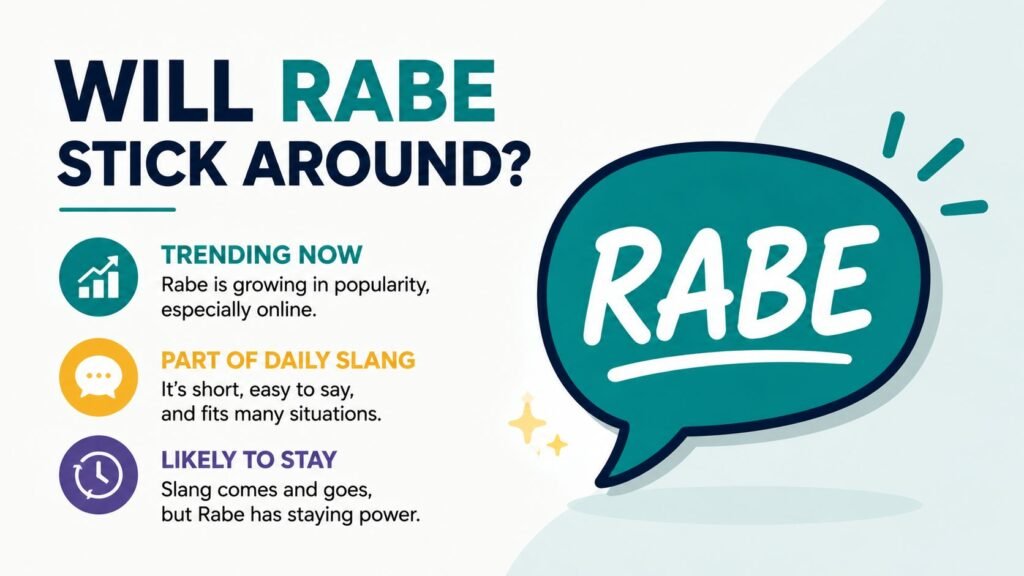
Here’s an honest, unhyped take: most trending slang with this level of inconsistent, low-volume usage doesn’t last. Terms that stick around tend to converge on one clear meaning fairly quickly, get picked up by creators with large followings, and spread across multiple online platforms at once. Rabe hasn’t shown that pattern yet.
That doesn’t mean it’s doomed. Plenty of niche texting terms persist quietly within smaller friend groups or communities for years without ever going mainstream, and that’s a perfectly normal life cycle for a slang word. Not every term needs to become “rizz” to matter. Some just become a private shorthand between the people who use it.
If rabe does grow, it will likely be because one of its three current meanings wins out over the others, giving the word a clearer identity. Right now, betting on which one wins is genuinely a coin flip.
FAQs
Is “rabe” a real dictionary word?
No. It has no entry in Merriam-Webster or Dictionary.com; it exists only as internet and texting slang.
What does “rabe” mean in a text message?
Most often it’s a soft, affectionate stand-in for “babe,” though it can also just add friendly tone with no literal meaning.
Is “rabe” the same as broccoli rabe?
No, that’s a coincidence of spelling. Broccoli rabe is an unrelated leafy vegetable also called rapini.
Is “rabe” offensive or negative?
No. It’s generally harmless, mostly affectionate or playful, with no rude connotation attached.
Will “rabe” become mainstream slang?
Uncertain. It hasn’t converged on one clear meaning yet, which usually slows down widespread adoption compared to terms like “rizz” or “bet.”
Conclusion
Rabe meaning slang still doesn’t have one fixed answer, and that’s okay. It works as a cute nickname, a hype word, or just friendly texture in a text. Context tells you which one applies. Don’t overthink it. Just read the room and match the energy.
At the end of the day, rabe meaning slang is still finding its footing online. It might fade, or it might settle into one clear meaning over time. Either way, it’s harmless, casual, and easy to use. Next time it pops up in your chat, you’ll know exactly what’s going on.